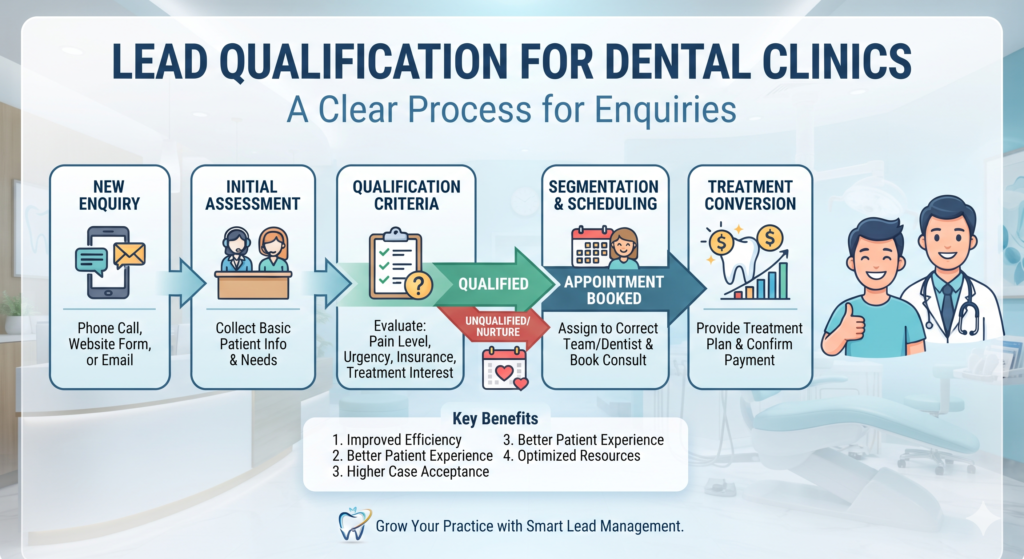
Dental teams receive enquiries from people with different questions, needs and timelines. A useful lead qualification process for dental clinics helps staff understand what follow-up is needed and route the enquiry appropriately. It should not treat a form submission or phone call as proof that someone is ready to schedule treatment.
Define what “qualified” means for your clinic
The term can mean different things to marketing, the front desk and the practice owner. Agree on observable criteria before adding a score or automation rule. For example, the team may want to know whether the person is reachable, which location they prefer, what general service they asked about and whether a next step has been recorded.
Keep the criteria operational and respectful. Do not ask marketing systems to judge clinical suitability. Clinical questions belong with qualified clinic staff.
Capture only information that helps the next step
Review website forms and call workflows. Remove fields that do not help staff respond or route the enquiry. Use plain language to explain why information is requested. Avoid collecting sensitive health details in general advertising or lead-management tools.
A basic CRM record might include the source, location, preferred contact method if provided, enquiry category, assigned owner and follow-up status. The exact fields should reflect the clinic’s process and privacy review.
Use stages that guide staff action
A simple sequence can make the next step visible:
- New enquiry
- Assigned for follow-up
- Contact attempted
- Contact made
- Appointment scheduled
- Follow-up later
- Closed
Define which event moves a record to each stage. For example, “contact made” should mean a real two-way exchange, not merely that an email was sent. Consistent definitions help prevent overcounting and make reports easier to interpret.
Where automation helps
Automation can assign the enquiry to a location, create a task, flag missing fields or remind an owner when no outcome has been recorded. It can also notify a manager when a record remains unassigned. Keep a human review step for ambiguous information, duplicate records and unusual requests.
Connect qualification to reporting
Compare sources using outcomes the clinic can verify, such as contact made or appointment scheduled. Keep the definitions consistent across campaigns and locations. Review records that lack a source or outcome before making budget decisions. Do not rely on a numerical lead score unless the team understands what it means and has checked that it reflects actual outcomes.
Octazing supports lead management automation, CRM workflows and marketing analytics. Read the related guide on AI lead triage with n8n for an example of routing enquiries with review steps. Explore Octazing’s services.