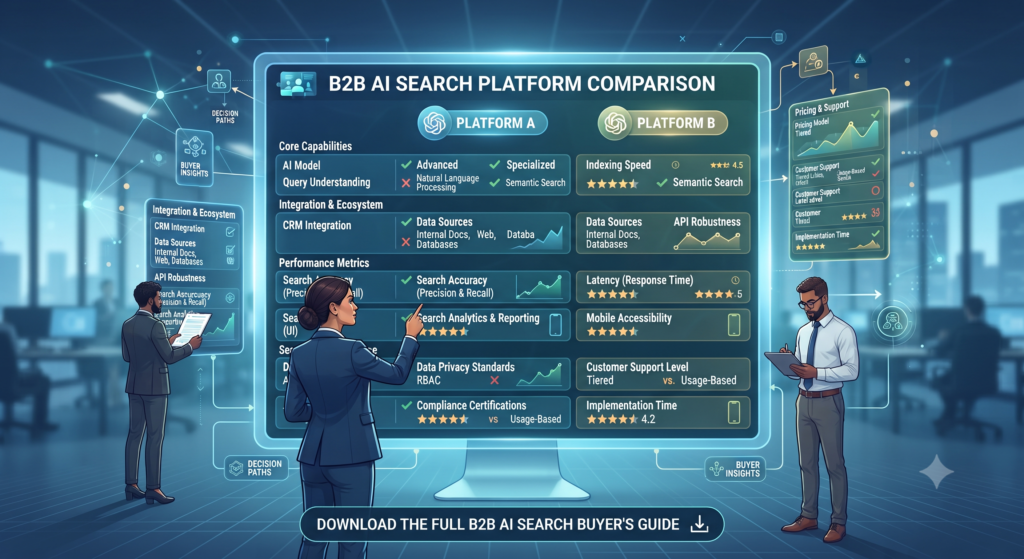
B2B comparison pages for AI search should help buyers choose between realistic alternatives. That includes doing the work internally, hiring support, changing a process, or postponing a project. A page that simply declares your service the winner gives readers little useful information.
This article covers the decision page within an AI search visibility content system. The goal is an understandable, well-supported comparison. It does not guarantee that a search engine or chatbot will cite the page.
Define who is choosing and what they need
Write a specific opening answer: who the comparison is for, what problem it resolves, and which constraints influence the choice. For a CRM integration, those constraints might include available engineering time, workflow complexity, exception handling, and ownership after launch.
Separate a tool comparison from a delivery-model comparison. “n8n versus a managed integration service” mixes software with staffing. Explain that distinction, then compare the actual operating models rather than pretending they are interchangeable products.
Use criteria that change the decision
| Criterion | Question to answer |
|---|---|
| Implementation ownership | Who designs, tests, and approves changes? |
| Maintenance | Who investigates failed runs and API changes? |
| Data boundaries | What records can the process read or change? |
| Cost scope | Does the estimate include monitoring and recovery? |
| Exit path | Can the buyer retain workflow definitions and documentation? |
Use the same criteria for every alternative. Mark unknowns as unknown rather than inventing numbers. If a feature depends on a subscription, configuration, or integration, state the condition beside the claim.
Give conditional recommendations
A credible comparison can recommend internal implementation when the team has an accountable technical owner and a manageable workflow. It can recommend outside support when the process spans several systems and recovery responsibilities are unclear. The recommendation should follow from the criteria you have already explained.
Include a “delay the project” case. If nobody agrees on the required outcome or field definitions, more software may automate disagreement. The buyer should know what to resolve before requesting a quote.
Show evidence without borrowing credibility
Link platform claims to official documentation and date material commercial assumptions. Google encourages helpful, reliable, people-first content in its content guidance. Support the reader’s choice with firsthand explanations of the work, not an invented experience narrative.
Maintain an evidence register for items such as feature availability, published pricing sources, and sample acceptance criteria. If you have not personally tested a feature, do not present the page as a hands-on review.
Make the page easy to inspect
Use a descriptive title, a short answer near the start, a compact comparison table, and sections explaining material trade-offs. Keep key reasoning in visible text. Do not hide the actual limitations behind a downloadable brochure or an enquiry form.
Give every comparison a primary intent. A separate implementation guide can explain webhook retries in depth; the comparison page only needs to explain why recovery matters to the purchasing decision. Link to the deeper page at that point.
Example: internal build or implementation support
Imagine a marketing team with one lead source, a documented CRM schema, and an engineer responsible for maintenance. Its comparison should examine whether a small internal workflow meets the requirements. A second team with multiple forms, ownership conflicts, and no recovery process faces a different implementation problem.
These are illustrative situations, not client results. The value is showing how the same criteria produce different recommendations.
Review before publishing
Ask a colleague to choose an option using only the page. If they cannot explain why it fits, the comparison needs clearer criteria. Check the sources, links, conditions, and update date. Then use consistent visibility observations to learn which buyer questions the page appears to answer.