Case study
n8n lead-ops workflow library reducing manual handoffs
Executive summary
A growing team had accumulated a collection of one-off automations (Zapier, scripts, manual processes) that were fragile, poorly documented, and hard to hand over. We replaced the patchwork with a modular n8n workflow library that became the single operating layer for lead management.
The challenge
- Automations lived in multiple tools and personal accounts
- When something broke, diagnosis was slow and ownership unclear
- New channels or clients required rebuilding similar logic from scratch
- Knowledge sat with individuals rather than in a maintainable system
- Scaling the lead-ops process meant adding more manual effort or more brittle Zaps
The system we built
- Process mapping — End-to-end journey from signal to agent-ready conversation documented.
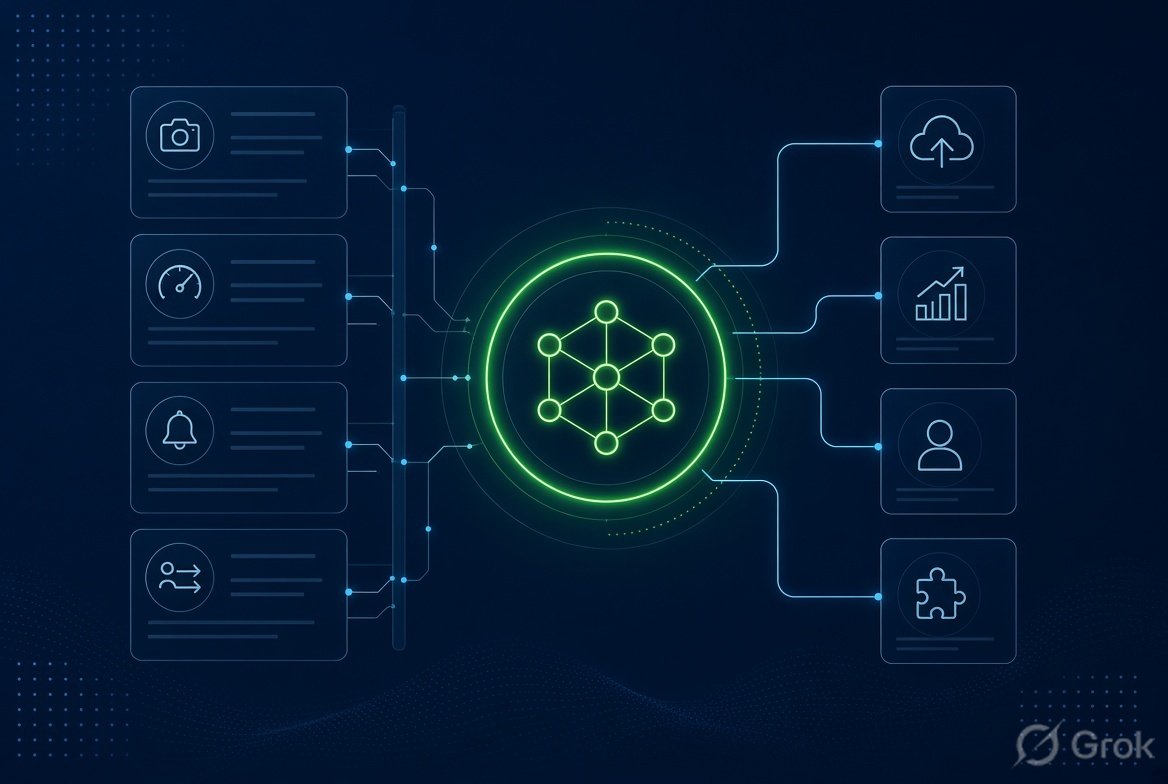
- Modular design — Capture, enrichment, scoring, multi-channel notification, routing, and logging built as composable, reusable n8n workflows.
- Documentation & ownership — Clear runbooks, naming conventions, and monitoring so any team member could understand and improve the system.
- Compounding improvement — Each new client or channel extended the library instead of creating a new silo.
Results
- Manual handoff steps and “who owns this lead?” friction reduced
- Response and routing latency improved through reliable orchestration
- Onboarding new channels or similar clients became significantly faster
- Operational risk of single points of failure decreased
- A living, versionable asset was created that supports a true Workflow-as-a-Service model
Why it matters
This case demonstrates the shift from “we set up some automations” to “we own a scalable process system.” Reusable, documented workflows are the technical and operational foundation of a WaaS offering — and the kind of process innovation and scalable business model that DPIIT recognition is designed to support.