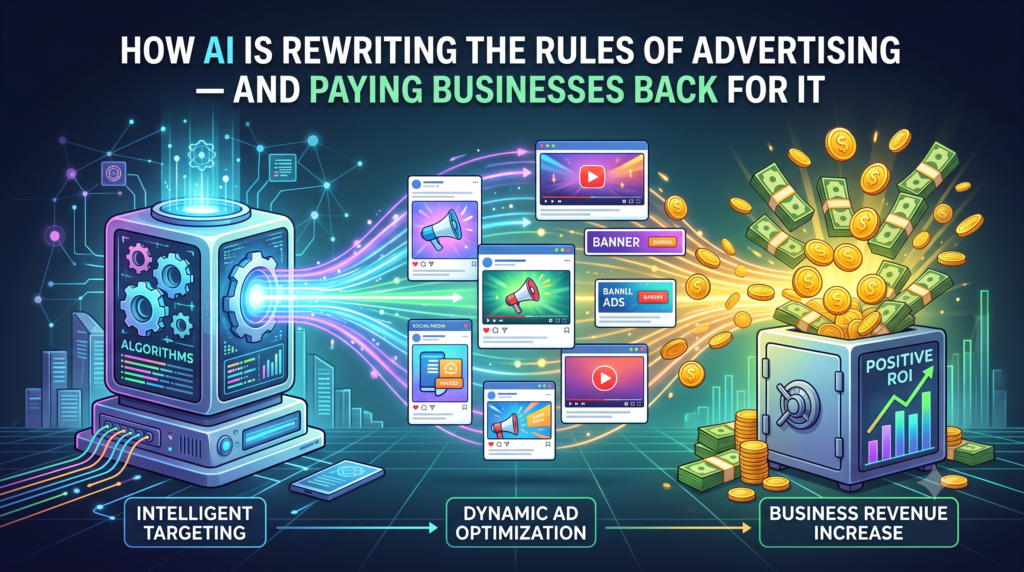
“Claude advertising” means two very different things depending on who’s asking, and mixing them up leads to some confused expectations. So let’s separate them cleanly before going further:
- Advertising on Claude — brands paying to appear in Claude’s responses. This doesn’t exist. Anthropic doesn’t run ads in Claude products, and it doesn’t let advertisers pay to have Claude promote things in a conversation.
- Advertising with Claude — marketing and ad teams using Claude as a tool to plan, analyze, and produce advertising work. This is real, growing fast, and is what the rest of this post is about.
No, Claude Doesn’t Show You Ads
This is worth stating plainly because it’s a genuine point of differentiation. Anthropic’s products are ad-free — no sponsored placements, no paid promotion slipped into an answer, no advertiser influence over what Claude recommends. If you ask Claude for a product recommendation, the answer isn’t shaped by who paid for visibility, because nobody can pay for it. That matters more than it might seem: it’s part of why people trust Claude’s answers to be about what’s actually useful rather than what’s been bought and placed.
So when people talk about “Claude advertising,” they’re almost always talking about the second meaning — how advertisers and marketers use Claude as part of their own workflow.
What Claude Actually Does for Advertisers and Marketers
Claude isn’t an ad-buying platform. It doesn’t hold a media budget, and it doesn’t place bids the way Google Ads’ or Meta’s automated systems do. What it does instead is sit alongside those systems as an analyst, strategist, and creative partner — the layer that decides what to test, interprets what happened, and drafts what goes out next.
Reading and reasoning over campaign data
Through the Model Context Protocol (MCP), Claude can connect directly to advertising platforms — Google Ads, Meta Ads, TikTok Ads, and others — and pull live account data into a conversation: spend, conversions, CPA, ROAS, click-through rate, search terms, and budget pacing. Instead of exporting a spreadsheet and eyeballing it, a marketer can ask Claude to pull the last 30 days of campaign performance, flag underperforming ad groups, and explain why a particular campaign’s CPA spiked — something that requires reasoning across multiple metrics at once, not just running a formula.
This turns Claude into something closer to an on-demand analyst than a chatbot: point it at the data, and it can produce a structured diagnosis instead of a generic checklist of “best practices.”
Drafting and iterating creative
Ad copy, headlines, video scripts, landing page variants — this is the most common entry point for teams adopting Claude. Because Claude handles long context well, a marketer can hand it an entire brand guide, a set of past high-performing ads, and a campaign brief in one conversation and get creative output that’s consistent with brand voice rather than generic AI copy. Anthropic’s own marketing team has used this internally — its influencer marketing group, for instance, uses Claude to draft scripts for influencer and podcast placements, freeing up significant time that used to go into first-draft writing.
Running the whole workflow, not just one task
For teams comfortable with a more technical setup, Claude Code lets a single marketer manage an entire campaign workflow — connecting to Google Ads, generating reports, drafting copy, and even proposing (human-approved) changes to live campaigns — from one interface. Claude Cowork extends a similar idea to non-developers: a visual workspace where recurring marketing tasks (weekly performance reports, competitor audits, content calendars) can be scheduled and run repeatedly without rebuilding the process each time.
Agencies handling multiple client accounts have leaned into this pattern in particular. Managing SEO audits, ad copy variants, and monthly reporting across a dozen clients is exactly the kind of repetitive-but-detail-sensitive work that benefits from a tool that can hold a large amount of context (a full client brief, months of performance history) and produce structured, on-brand output every time.
Strategy and audience thinking
Before any ad gets written, someone has to decide who it’s for and what it’s trying to say. Claude is frequently used earlier in the funnel than the ad itself — building audience personas from research, stress-testing a positioning angle, or working through a messaging framework — because this kind of reasoning-heavy, iterative thinking is where a capable language model adds more value than a template generator would.
Where Claude Fits, and Where It Doesn’t
It’s worth being honest about the boundaries, because overselling any AI tool’s role in advertising sets teams up for disappointment.
Claude is a strong fit for:
- Analyzing structured performance data and explaining what’s driving results
- Drafting and iterating creative at high quality when given real brand context
- Automating recurring reporting and account audits
- Strategic and audience-level thinking that benefits from nuance and long context
Claude is not:
- A bidding or media-buying engine — that’s still Google Ads, Meta, TikTok, and similar platforms doing the actual placement and optimization
- A replacement for human approval on live campaign changes — most serious workflows keep a human in the loop before anything spends real budget
- An ad-serving or ad-display product itself — Anthropic doesn’t monetize Claude through advertising, so there’s no “Claude ad network” to speak of
The Practical Setup
Most teams end up in one of three modes, depending on technical comfort:
- Claude.ai / Claude for Small Business — for marketers who want a straightforward chat interface, with reusable Skills (packaged instructions and brand guidelines Claude loads automatically when relevant) handling repeatable tasks like editorial calendars or CRO audits.
- Claude Cowork — for teams that want a visual workspace, recurring scheduled tasks, and the ability to connect multiple tools (ad platforms, spreadsheets, documents) without writing code.
- Claude Code — for technically comfortable marketers who want direct, scriptable control over MCP connections to ad platforms and want to build a more customized, repeatable pipeline.
None of these require an advertiser to buy anything from Anthropic — there’s no ad product to purchase. The value comes entirely from what a marketing team builds with Claude as the reasoning layer in their own stack.
The Bottom Line
If someone mentions “Claude advertising,” the accurate read is this: Claude doesn’t advertise to you, and nobody can pay to be recommended by it. What Claude does do is help the people building ads — connecting to the platforms that place them, making sense of the data those platforms generate, and drafting the creative that goes into them. It’s the strategist and analyst in the room, not the auctioneer. For marketing teams, that distinction is exactly what makes it useful: a tool whose output isn’t shaped by anyone else’s ad budget.